

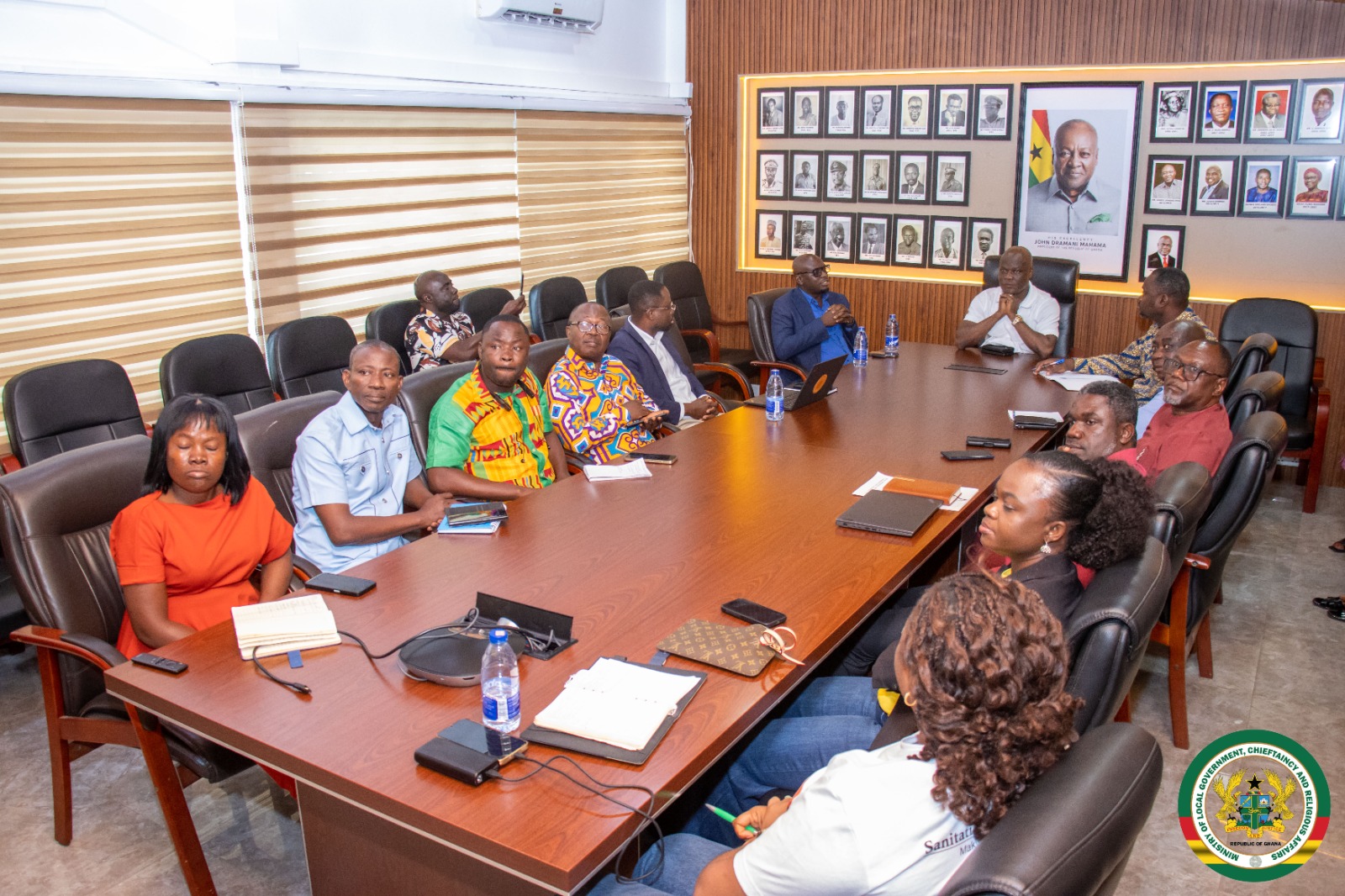
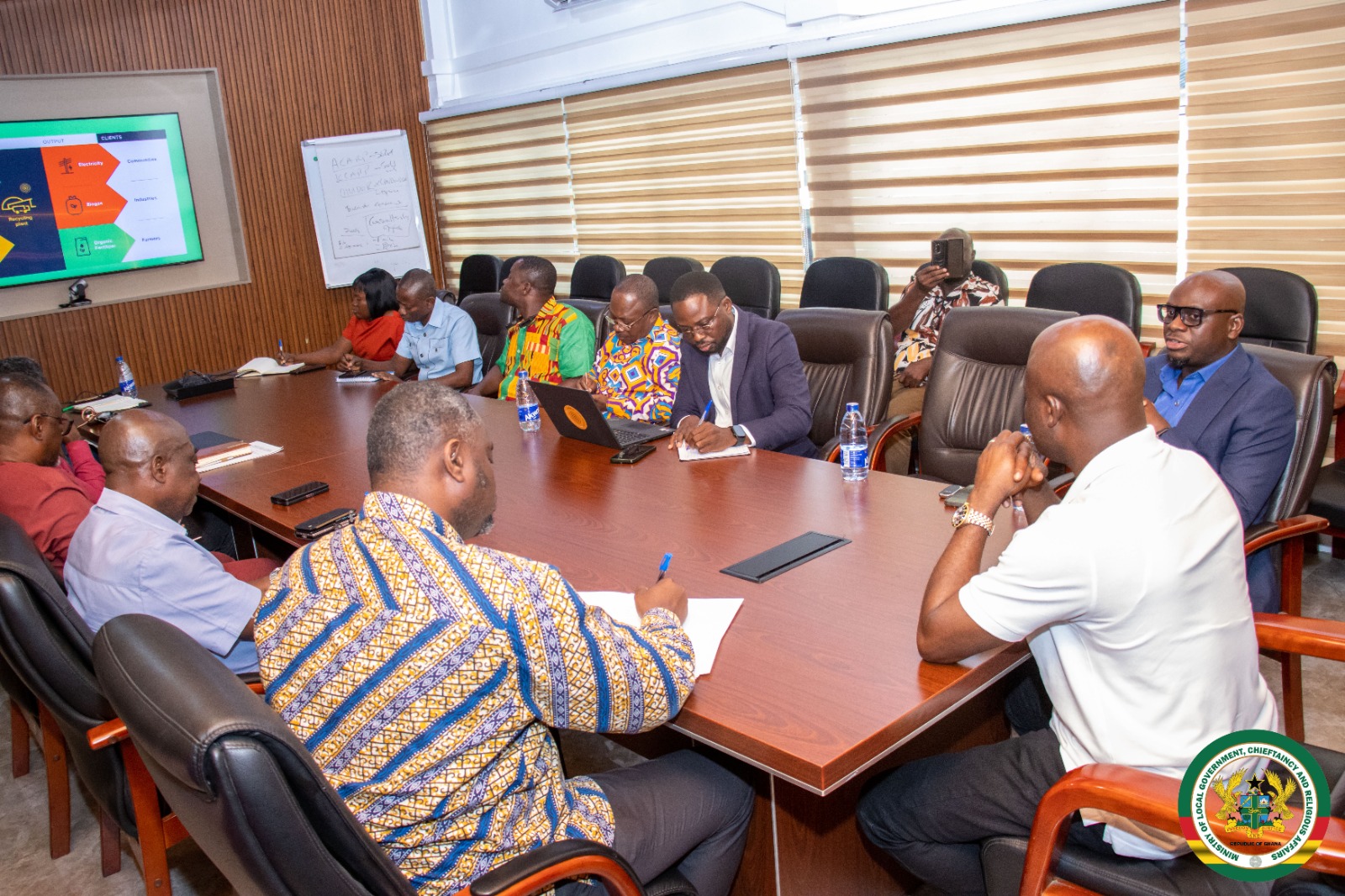

The Minister for Local Government, Chieftaincy and Religious Affairs, Hon. Ahmed Ibrahim, has reiterated the ministry’s commitment to strengthening partnerships that advance sustainable sanitation and waste management across the country. This assurance was given when Safisana, a company operating in the circular economy and waste-to-energy sector, paid a courtesy call to officially welcome the minister to his new position.
Hon. Ahmed Ibrahim emphasised that the ministry is open to collaboration with institutions whose work aligns with national priorities in environmental sustainability, community well-being, and improved service delivery. He noted that addressing sanitation challenges remains one of the ministry’s key focus areas, particularly as urbanisation increases and pressures on waste management systems intensify.
The minister highlighted the importance of leveraging both public and private sector expertise to modernise the country’s sanitation infrastructure. He stated that such engagements help the ministry explore practical solutions that can support local assemblies, strengthen waste treatment systems, and contribute to cleaner, healthier communities. He expressed satisfaction with the discussions held and encouraged continued dialogue with partners.
Safisana used the visit to brief the minister on its ongoing operations and its interest in possible areas of partnership with government agencies and local authorities. The company operates a recycling and waste-to-energy facility in Ashaiman and has been exploring opportunities for collaboration with public institutions to expand sustainable waste treatment models. Safisana expressed its readiness to support national efforts aimed at improving sanitation outcomes.
The meeting also touched on the ministry’s broader plans to promote sustainable and cost-effective waste management solutions across municipalities. Hon. Ahmed Ibrahim stressed that innovative approaches, whether in wastewater treatment, handling of organic waste, or improving sanitation services in urban communities, play a critical role in achieving long-term environmental goals.
The ministry assured Safisana of its willingness to work with responsible partners whose initiatives complement government policies. Both parties agreed to continue discussions on specific areas of cooperation that could contribute to improved service delivery, environmental protection, and enhanced resilience within local assemblies.
SOURCE: Sandra Owusu Asamoah
MLGCRA PR Unit