Previous Next

Hon. Rita Naa Odoley Sowah Champions Youth Empowerment Through Culture

Deputy Minister for Local Government, Chieftaincy and Religious Affairs, Hon. Rita Naa Odoley Sowah, has underscored the importance of youth empowerment as a tool to combat the increasing youth drug abuse at the La Traditional Area and its environs.

Speaking under the theme “Empowering Ghanaian Youth: Breaking the Chains of Drug Abuse through Cultural Heritage and Community Support,” at the 2025 Afrimi Yam Festival on Tuesday, 15th July, 2025 at Abese La - Adonten, a sub-burb of Accra, she hailed the role of traditional festivals in shaping societal values and rebuilding stronger communities.  She stressed that the time was a perfect one for the Chiefs and people of La to stand firm and support the young ones in the area.

According to her, “festivals like Afrimi are not just celebrations, they are platforms for reflection, education, and renewal. Through dance, storytelling, and rites, we instill discipline, resilience, and pride in our youth and these are tools to resist the pull of substance abuse.”

Hon. Sowah commended Abese La‑Adonten Mantse, Nii Kwade Okropong I, for his transformational leadership and dedication to cultural progress, adding that the fight against drug abuse is a shared responsibility among traditional leaders, faith-based institutions, educators, and parents.

She used the opportunity to comment on some of government's flagship programmes geared at boosting local economic development, reaffirming government’s commitment to the “National Reset Agenda” and the 24-Hour Economy Strategy.

 The Deputy Minister outlined some key initiatives aimed at empowering young people, like the Youth Resource Centres across all sixteen regions to provide counselling, training, and recreation; Expanded vocational, digital, and entrepreneurial programmes; labour law reforms for youth-friendly workspaces; and the Increased youth participation in local governance.

 She emphasized that the initiatives  are not just interventions, rather, they are bold investments in the future of the youth, and urged the Chiefs and people to take advantage of it, stating that most of the young people engaging in the drug menace could be re-oriented and given employable skills to help reduce the scourge  of drug abuse.

She pledged the Ministry’s support in community-led youth development initiatives at the La Traditional Area, calling for closer collaboration between traditional authorities and government institutions.

Hon. Sowah also praised the Afrimi Festival Oversight Committee for its efforts in organising a well-structured, purpose-driven celebration, urging that the festival become a catalyst for a wider social movement.

She was  hopeful that the festival will unite and become a great force to enhance development in the area, stating that her appointment as the Deputy Minister for Local Government, Chieftaincy and Religious Affairs must bring unity among the chiefs in the La Traditional Area where she hails from.

Nii Kwade Okropong I used the occasion to appreciate and celebrate the Deputy Minister for her continuous support and contribution to the La Traditional Area. He gave her a citation and a plaque, in demonstration of how she has immensely contributed to her community over the years, giving her all to La and also making them proud with her appointment as the Deputy Minister for Local Government, Chieftaincy and Religious Affairs.

Source : Chantal Aidoo

Public Relations Unit, MLGCRA

MLGCRA Builds Capacity of Traditional Council Registrars to Combat Gender-Based Violence and Harmful Cultural Practices

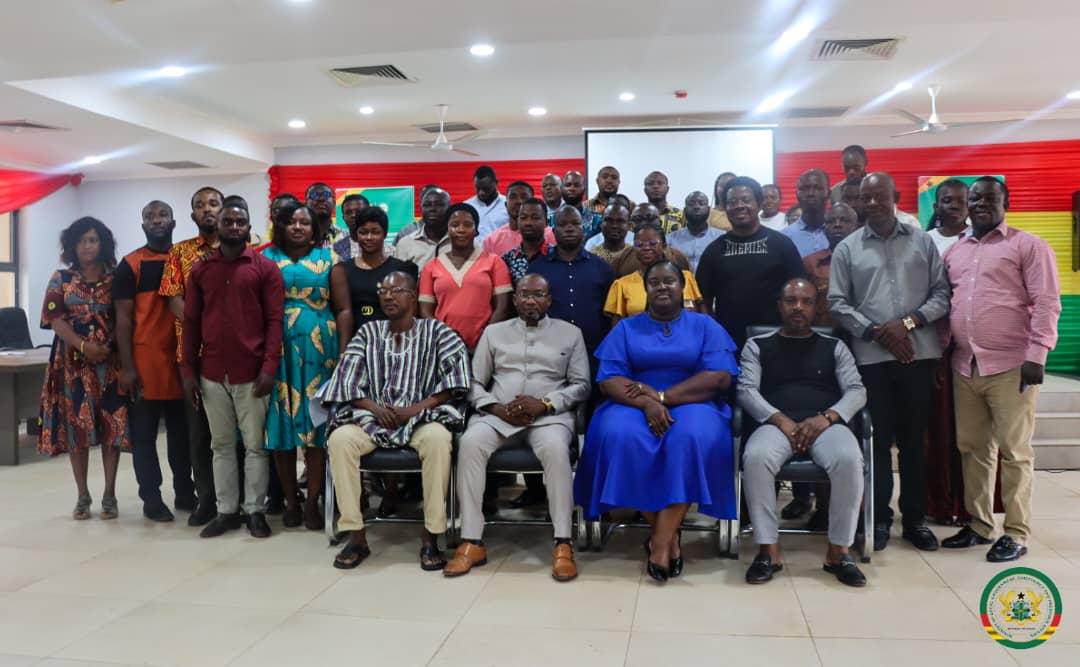
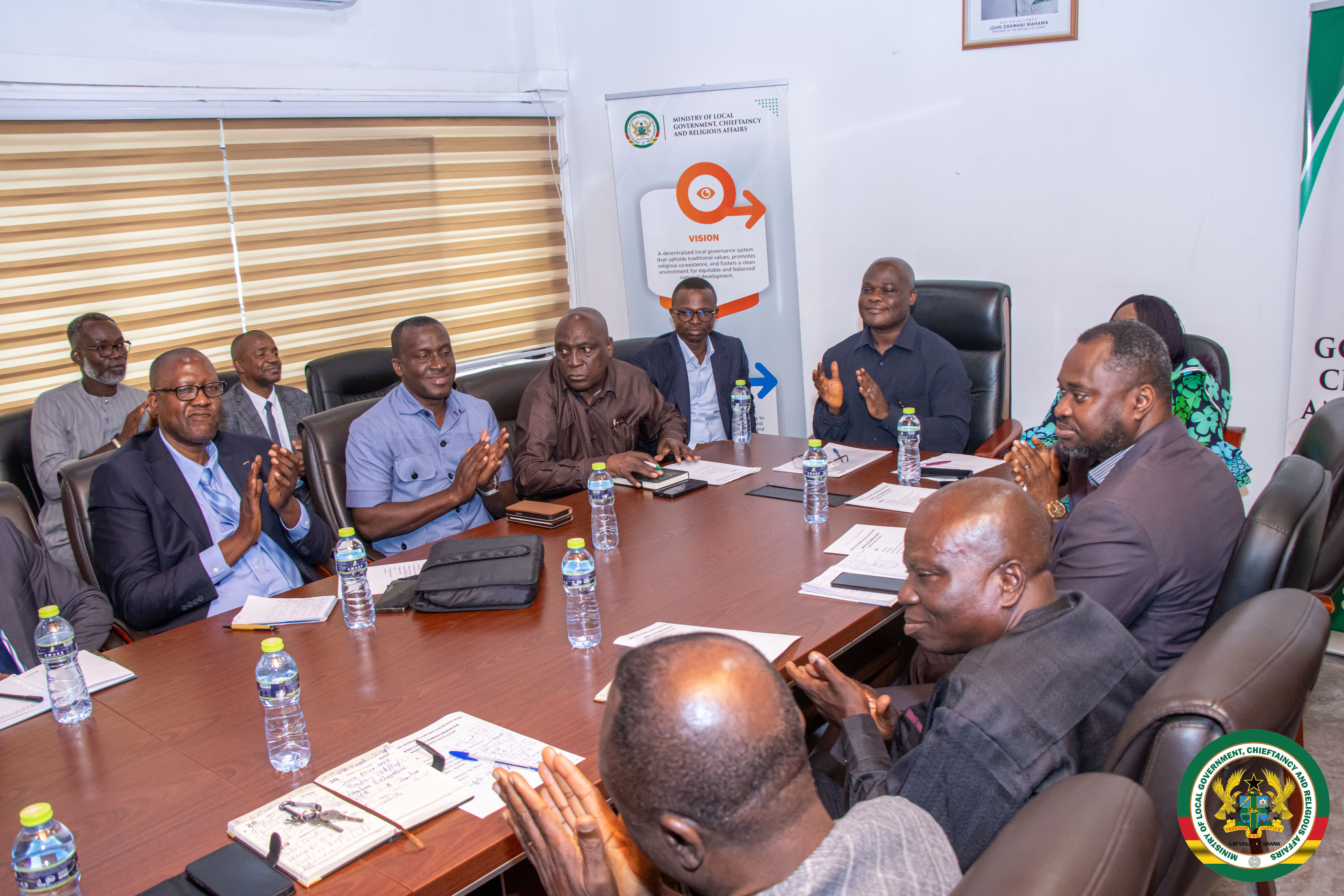
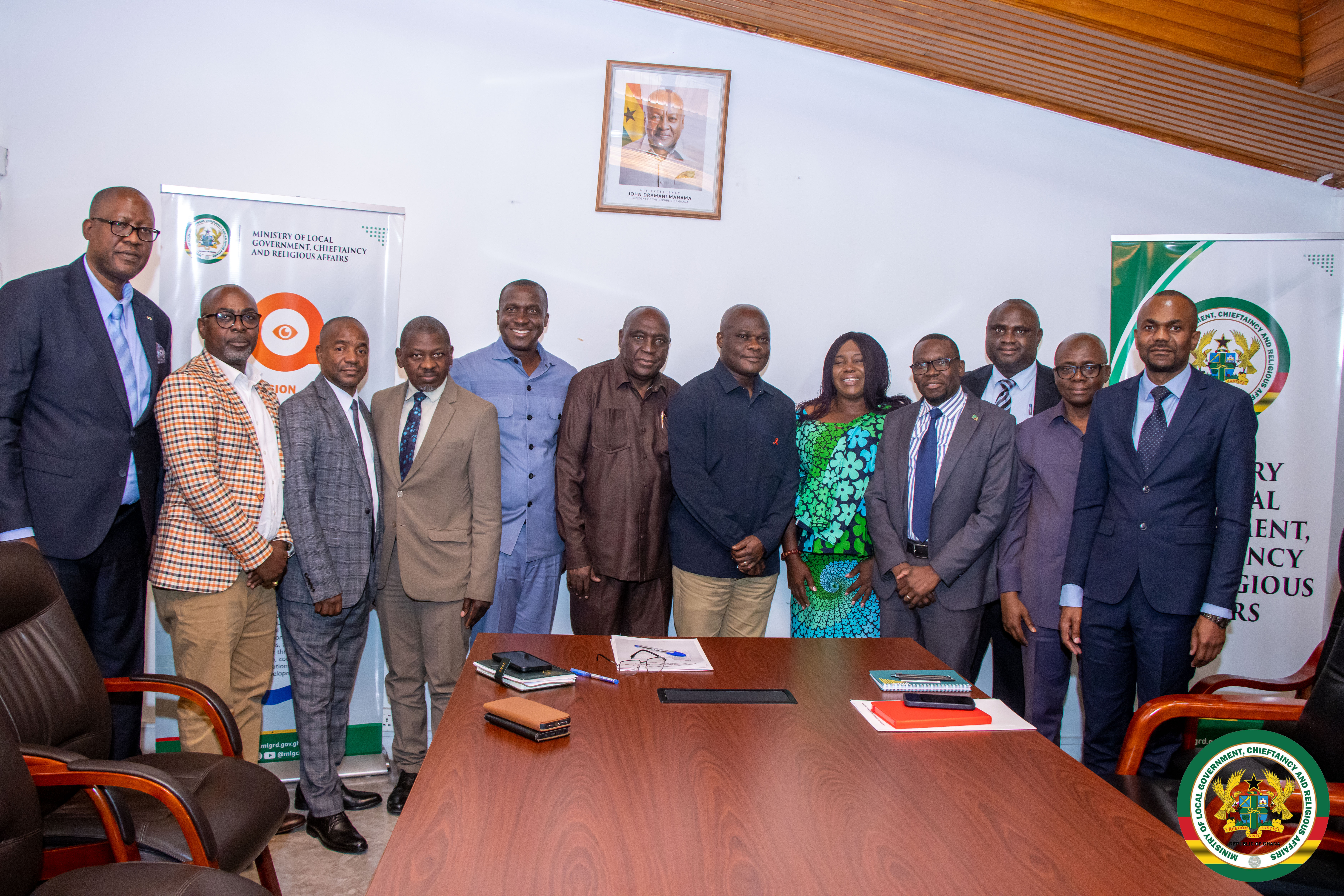
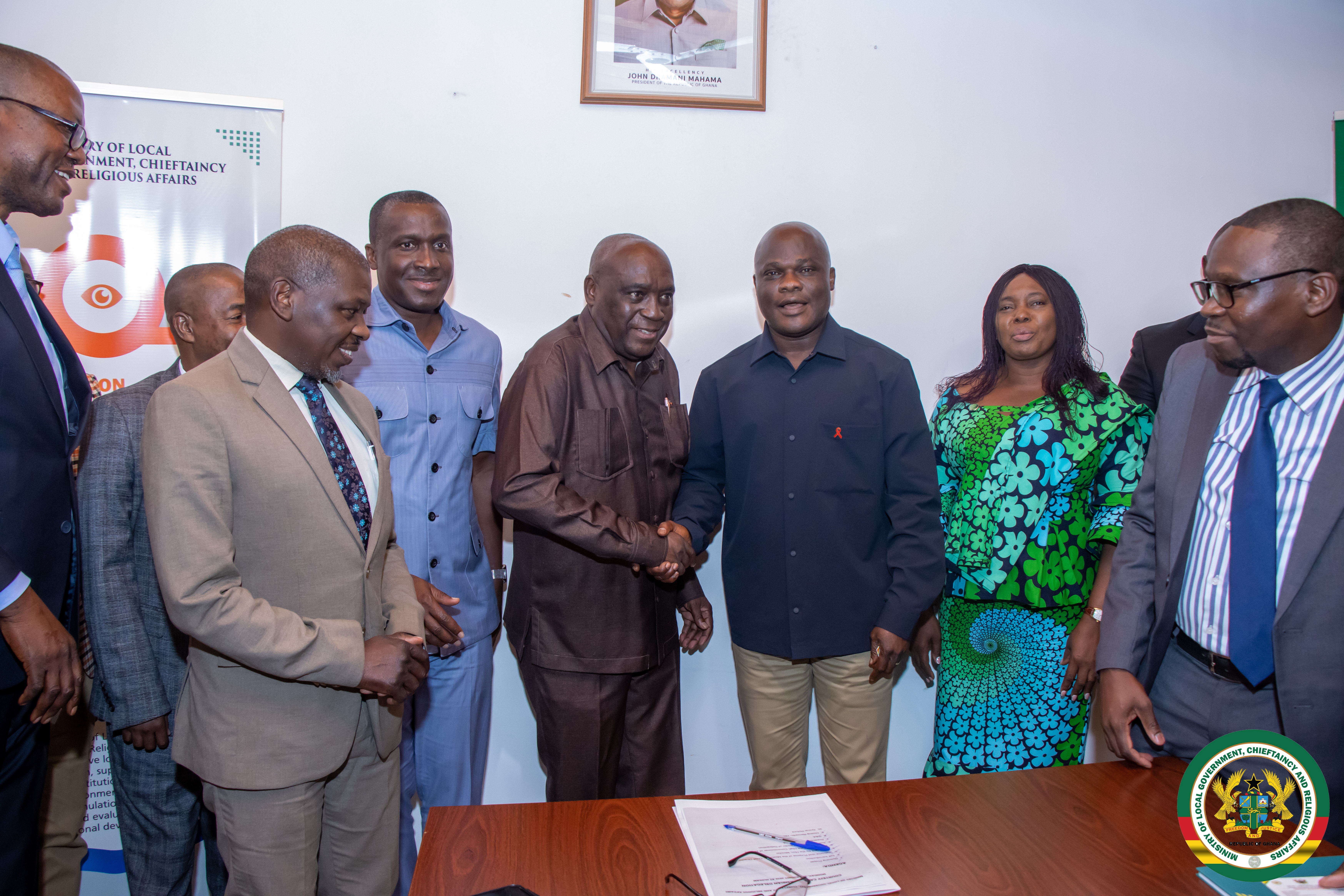
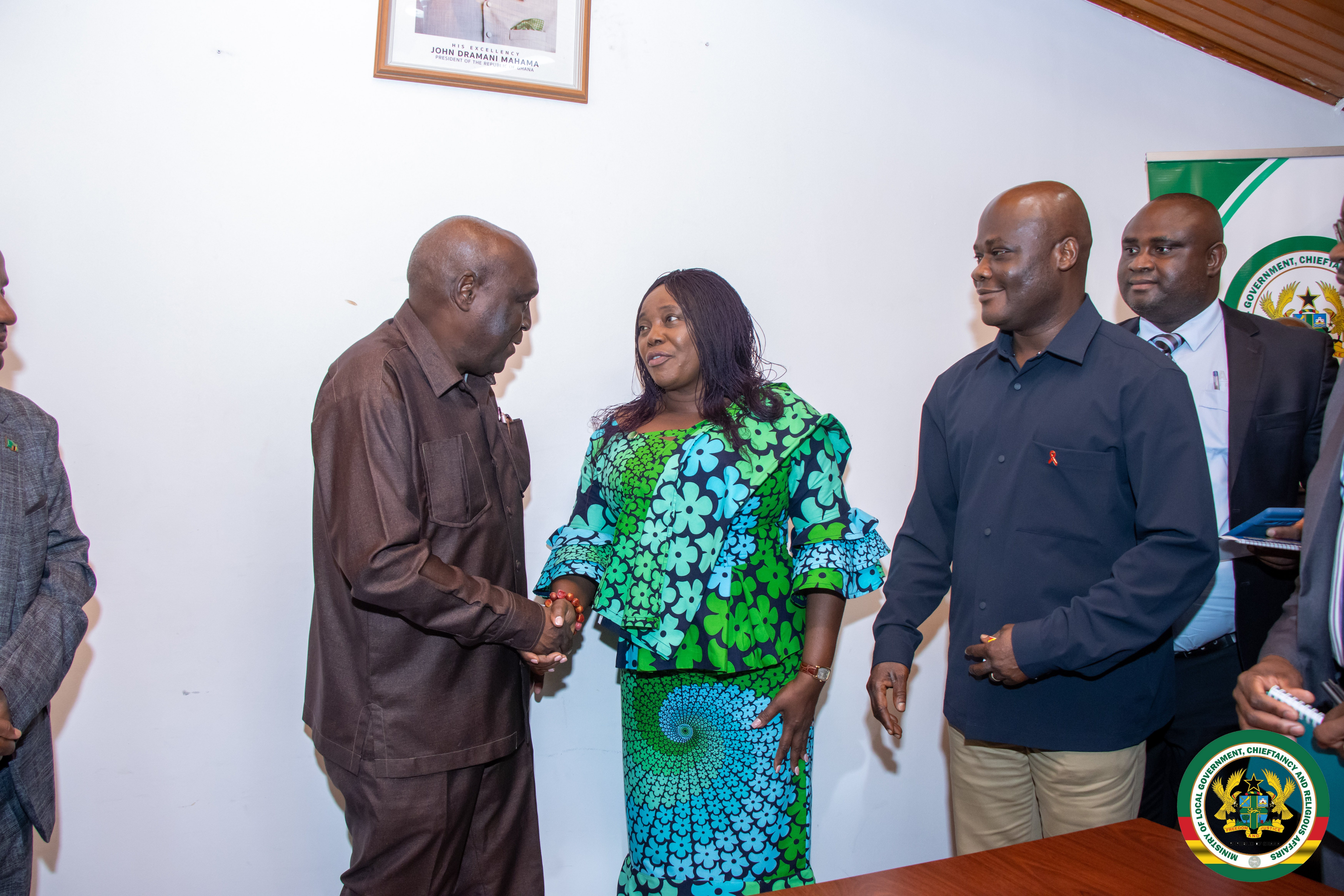
 In a concerted effort to curb Gender-Based Violence (GBV) and harmful traditional practices such as child marriage, the Ministry of Local Government, Chieftaincy and Religious Affairs (MLGCRA), in collaboration with the United Nations Population Fund (UNFPA), has initiated a strategic engagement with Traditional Council Registrars in the Northern sector of the country.

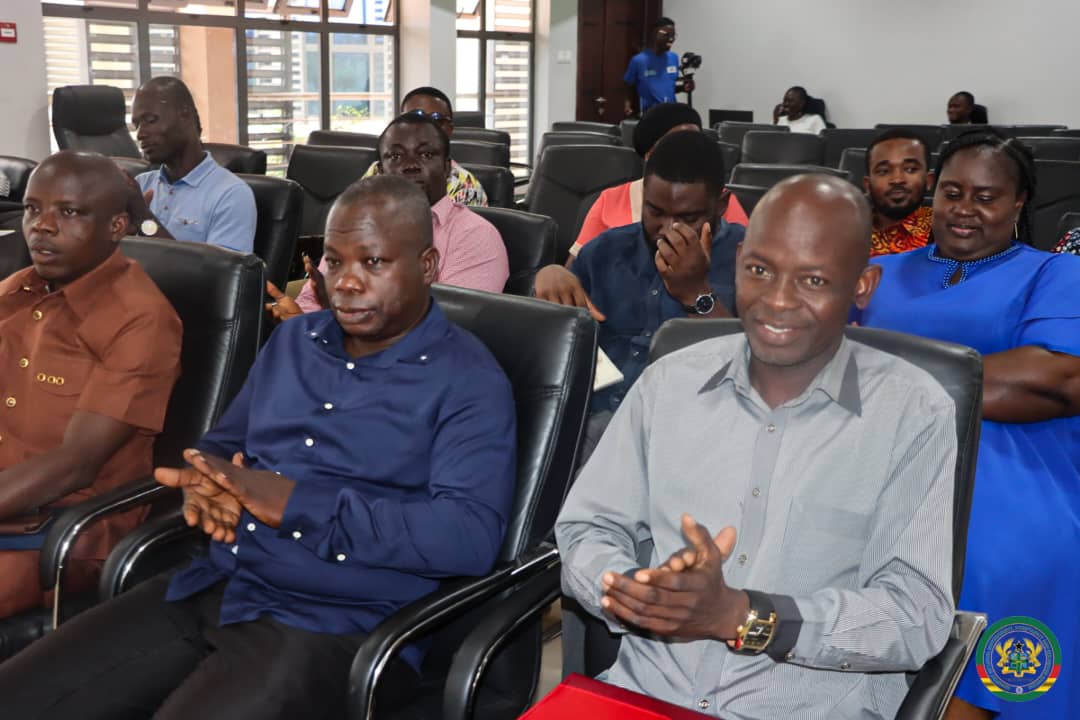
The engagement, under the theme “Strengthening the Capacity of Traditional Councils on Gender-Based Violence and Harmful Practices Including Child Marriage Using the National Framework for Engaging Traditional Authorities”, saw registrars from the Upper West, Upper East, Northern, Savannah, North East, and Bono East Regions coming together to share ideas, while receiving training on the issues.

In a speech read on behalf on the Chief Director of MLGCRA, Mr. Amin Abdul -Rahaman, by the Head of Religious Affairs Unit, Mr. Richard Obeng Boafo, it came to light that  data from the 2021 Population and Housing Census indicated that child marriage remains alarmingly prevalent in several northern districts, with over 120,000 children aged 12 to 17 years reported to be married or cohabiting.

 This social issue, he noted, can be classified as a form of sexual and gender-based violence, as it violates fundamental human rights and robs young girls of education, health, and economic opportunities. He observed that it was for this reason that the Ministry has been partnering with the UNFPA to organise a series of capacity building workshop to aid the frontline officers handle such issues that come before the chiefs and the Council smoothly.

The Chief Director reaffirmed the Ministry's commitment to supporting traditional and religious institutions in their roles as custodians of cultural values and agents of community transformation. He, was of the view that, traditional and religious leaders are vital allies in addressing GBV and harmful practices noting that their influence at the grassroots is indispensable.

In 2024, under a UNFPA-supported work plan, 120 Traditional Council Registrars were trained using a specialised toolkit, and engagements were held with the National House of Chiefs and over 60 religious leaders. These efforts strengthened seven communities to make declarations to end child marriage, with the Paramount Chiefs championing it.

Mr. Amin-Rahman underscored the critical role of the media, community actors, and religious institutions in sustaining the momentum Stating that there must be a cautious effort to reduce these harmful practices to save lives.

Speaking on behalf of the UNFPA Country Representative, Dr. Winfred Ochan, a Regional Representative at UNFPA , Jude Demosie said the UNFPA is very keen on safeguarding the lives of people by identifying and supporting the vulnerable in societies. He said it was for this main goal that they would want to reduce Gender-Based Violence and it's harmful practices in African countries with Ghana being one of them.

Regional Gender Officers Charity Batuure and Bushira Alhassan emphasized the importance of traditional authorities in reversing these harmful trends. They noted that it is very essential to communicate effectively where necessary and also report any suspicious issues to their regional offices. They were of the view that child marriages were destroying the dreams of the young girls today and needed to be reduced to its barest minimum.

The GBV and its harmful practices training, held on Thursday, 17th July, 2025 in Tamale, aims to deepen understanding of GBV among council registrars, address unconscious bias, and operationalize the national framework for engaging traditional leaders on sexual and reproductive health and rights (SRHR) as well as family planning.

Source : Chantal Aidoo

Public Relations Unit, MLGCRA

MLGCRA Deputy Minister Charges MMDAs to Lead Local Action Against Galamsey

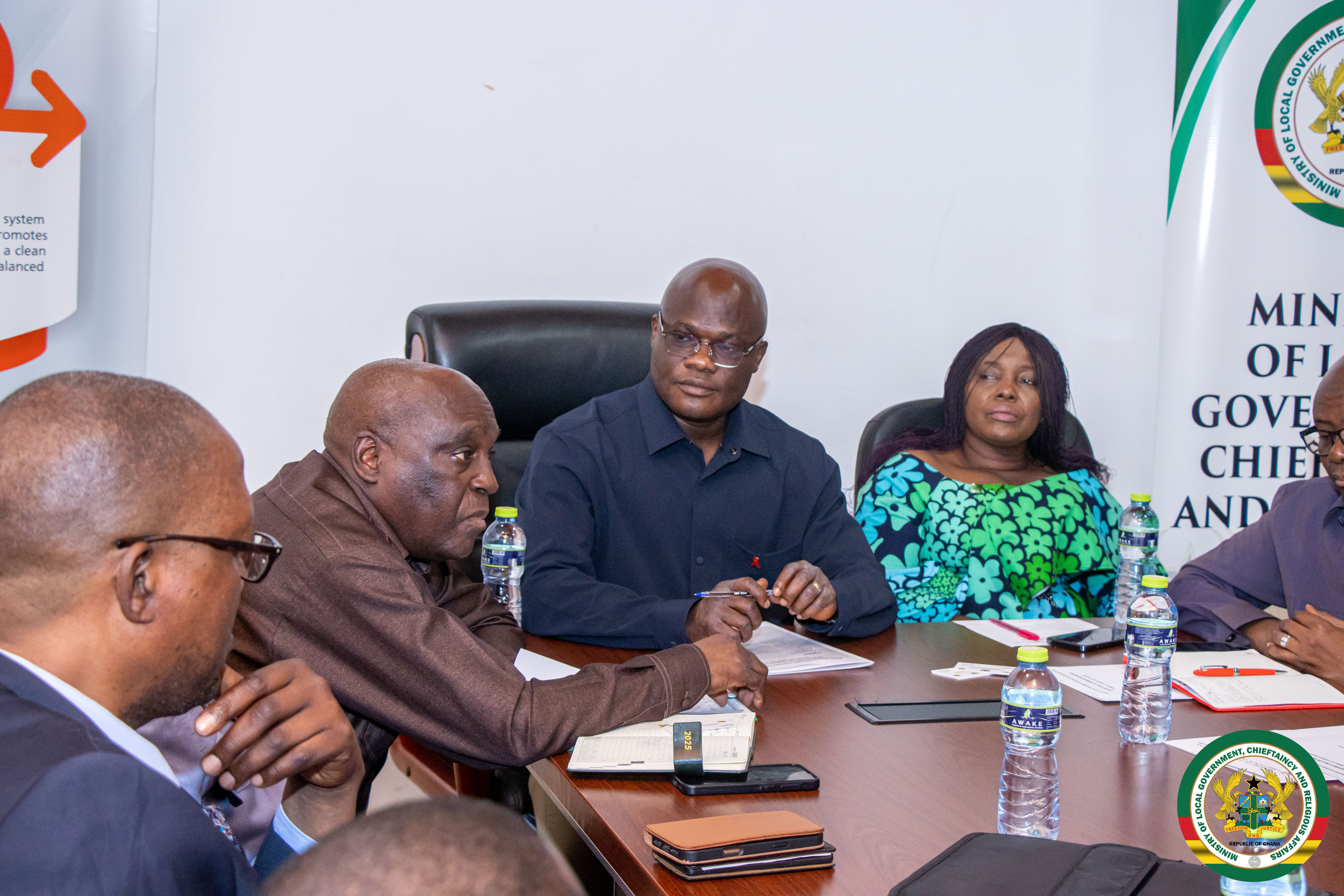
The Deputy Minister for Local Government, Chieftaincy and Religious Affairs, (MLGCRA) Hon. Rita Naa Odoley Sowah, has charged Metropolitan, Municipal, and District Assemblies (MMDAs) across the country to lead decisive local action in the fight against illegal mining, popularly known as galamsey. Delivering a speech on behalf of the Minister, Hon. Ahmed Ibrahim (MP), at the Sustainable Mining Ecosystem Conference and Exhibition (ECOSUM CONFEX 2025), Hon. Sowah described the Assemblies as the first line of defence against environmental destruction and called on them to take bold steps to protect Ghana’s rivers, forests, and farmlands.

The two-day conference, held from 29th to 30th July 2025 at the National Theatre in Accra, was themed “Restoring the Blue Waters and Green Environment Initiative for a Sustainable Ecosystem – The Role of Multi-Stakeholders and Leadership”. It brought together key players from government, traditional leadership, civil society, and the mining sector to deliberate on the restoration of ecosystems severely affected by unregulated mining practices.

In her address, the Deputy Minister urged Assemblies to integrate Environmental, Social, and Governance (ESG) compliance into their core operations, particularly in permitting, inspections, and community monitoring. She further advised MMDAs to strictly enforce land use regulations to prevent mining near water bodies, sacred groves, and protected forests. Environmental taskforces, including the Blue Water Guards, she added, must be strengthened and well-resourced to clamp down on illegal mining hotspots.

Calling illegal mining a “socio-cultural and governance emergency,” the Deputy Minister warned of its far-reaching consequences; contaminated rivers, degraded ancestral lands, reduced agricultural productivity, and heightened insecurity. She called for fearless enforcement of anti-galamsey by-laws by MMDAs, while urging traditional authorities to withhold land from unlicensed miners and promote communal vigilance.

To address the root causes of galamsey, Hon. Sowah announced that the Ministry is collaborating with sector ministries and private partners to introduce youth-focused training programmes in agribusiness, green construction, and eco-tourism. The initiative aims to offer sustainable livelihoods to young people in mining areas and discourage their involvement in illegal mining. She noted that traditional and faith-based institutions are also being engaged to provide moral guidance and mentorship.

The Deputy Minister underscored the crucial role of traditional and religious leaders, describing them as “pillars of moral authority and cultural custodians.” She encouraged them to champion ESG principles, safeguard sacred natural sites, and facilitate productive dialogue between Assemblies and communities.

She concluded by reminding stakeholders that the path to a sustainable mining ecosystem begins at the community level. “The restoration of the blue waters and green environment will not be achieved solely through policies crafted at the center, but by the decisions taken in our communities,” she said. Hon. Rita Naa Odoley Sowah expressed confidence that the ECOSUM CONFEX 2025 will spark the partnerships and momentum needed to secure a greener and more resilient Ghana for future generations.


Our Facebook Feed

Our Twitter Page

Contacts Us

This email address is being protected from spambots. You need JavaScript enabled to view it.

+233 302 932 573

+233 302 932 574

+233 302 908 224

+233 302 906 828

P.O.Box M50 Accra Ghana, West Africa

MOD_DJ_EASYCONTACT_OPEN_FORM